In the rush to launch a new product, many brands overlook the most critical ingredient of all: Time. A freshly mixed perfume is a chaotic collection of molecules; it requires a period of maturation to become a harmonious masterpiece. At QASIMELGALALY FORMULAS, we teach that the “resting” phase is where the true luxury character of a scent is born.
Maturation vs. Maceration: What’s the Difference?
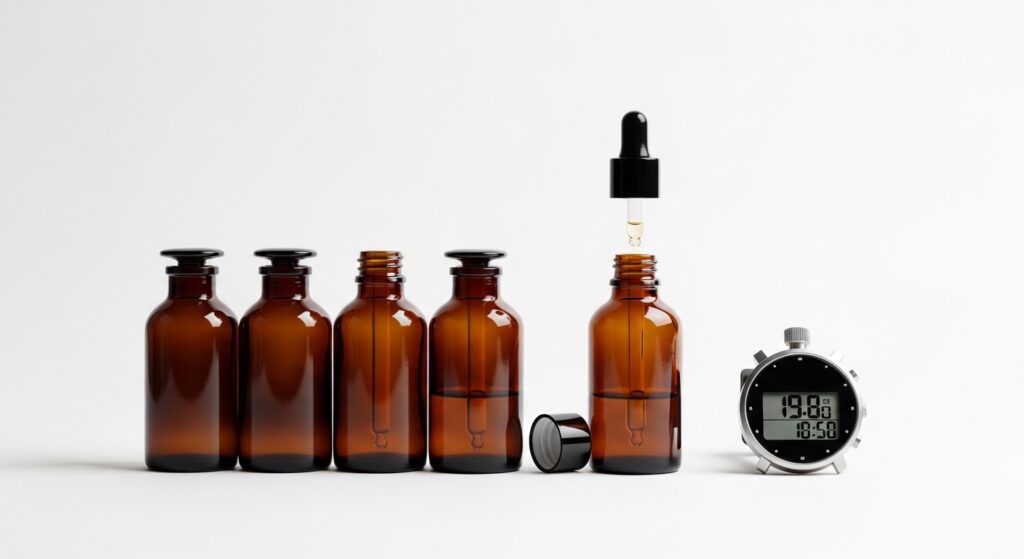
It is essential to distinguish between two stages. Maturation is the time the fragrance concentrate (the oils) rests alone to allow chemical reactions between the ingredients. Maceration occurs after the concentrate is diluted in alcohol. During this time, the alcohol and oils blend, allowing the “harsh” top notes to soften and the base notes to gain their full depth and sillage.
Skipping these stages results in a scent that may smell “thin” or overly alcoholic. To ensure your brand delivers a rounded, professional profile, our perfume shop provides technical schedules for the ideal resting times for each olfactive family.
Perfect Your Brand’s Olfactory Soul
A great formula is only half the battle. Our Professional Production Guides include specific maturation protocols to ensure your niche creations reach their peak performance before hitting the shelves. Don’t settle for less than perfection.
Download Production BlueprintsThe Chemistry of Harmony: Schiff Bases and Oxidation
During the weeks of resting, complex chemical reactions like the formation of Schiff Bases occur, especially between aldehydes and nitrogen-containing molecules. This process rounds off sharp edges and prevents the perfume from “breaking” over time. Furthermore, a controlled environment prevents premature oxidation, which is vital for maintaining the clarity of your juice.
Following IFRA standards also means ensuring your product is stable. We provide the stability data and maturation advice needed to produce a commercial-grade perfume that remains consistent from the first spray to the last drop in the bottle.
Why Maturation is Vital for Quality Control:
- Scent Stabilization: Eliminates the “raw” chemical smell of a new mixture.
- Enhanced Longevity: Allows the fixatives to fully anchor the lighter molecules.
- Clarity & Color: Prevents unwanted precipitation or cloudiness in the final juice.
- Batch Uniformity: Ensures that Batch A smells identical to Batch B after 4-6 weeks.
Conclusion: The Patience of a Master
Great things take time, and fine fragrance is no exception. By respecting the maturation process and using scientifically-balanced formulas, you guarantee that your customers experience the full, luxurious potential of your olfactory vision.
Master the art of patience and precision at Home – qgformula.com. Engineering the soul of scent.